Stephen’s Story: Regaining Confidence and Independence Through Intensive Neuro Physiotherapy
Background
Stephen experienced progressive osteoarthritis affecting his cervical spine, which led to significant spinal cord compression at multiple levels (C2–3 and C5–C7) in 2020. Due to the severity of the compression, he underwent spinal surgery to relieve pressure on the spinal cord.
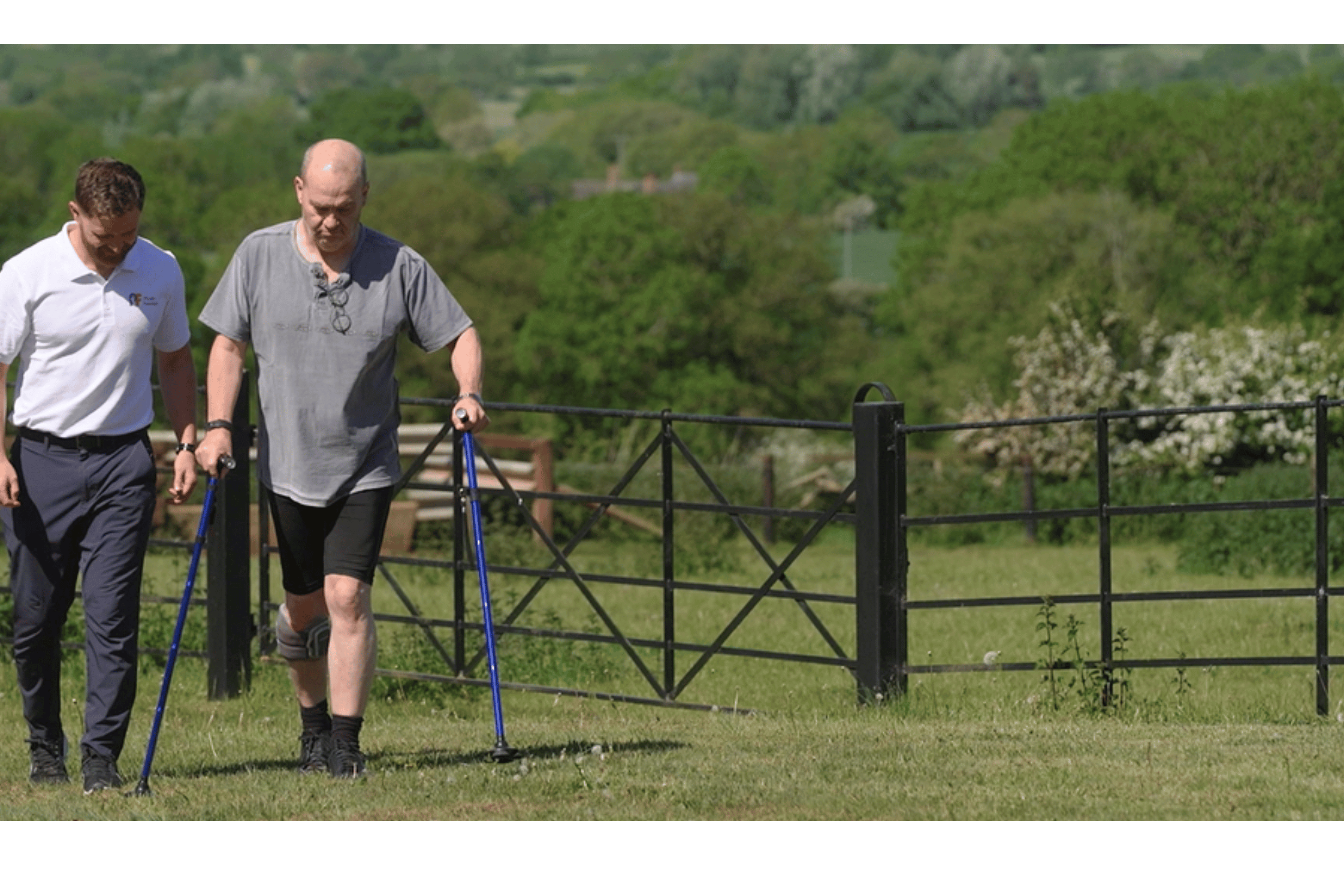
Following surgery, Stephen was left with an incomplete spinal cord injury and ongoing neurological symptoms affecting his mobility, balance, and strength. Although able to walk independently, he required two walking sticks outdoors and one walking stick indoors for stability and confidence.
Since 2023, Stephen has attended weekly neurological physiotherapy focused on improving strength, balance, mobility, and functional independence. Through consistent rehabilitation, he made steady progress and remained highly motivated to further improve his walking ability, endurance, and overall independence.
To help accelerate these gains, Stephen chose to undertake an intensive block of neurological physiotherapy.
Why Intensive Neuro Rehabilitation?
Emerging research continues to show that intensive neurological physiotherapy can produce meaningful improvements in mobility, strength, balance, and independence across a wide range of neurological conditions, including spinal cord injury, stroke, and traumatic brain injury.
Higher-frequency, task-specific rehabilitation helps maximise neuroplasticity — the nervous system’s ability to adapt and reorganise — often leading to greater functional improvements than standard weekly therapy alone.
Stephen’s Intensive Physiotherapy Programme
Over one week, Stephen completed an intensive neurological rehabilitation programme consisting of:
-
11 treatment sessions
-
4 consecutive therapy days
-
Up to 3 hours of therapy daily
The programme was tailored specifically to Stephen’s goals and focused on:
-
Improving lower limb strength
-
Increasing walking endurance
-
Enhancing balance and coordination
-
Building confidence with movement
-
Promoting greater functional independence
Treatment sessions were varied, engaging, and highly task-specific, incorporating:
-
Strength and resistance training
-
Treadmill and overground gait training
-
Balance and coordination exercises
-
Cardiovascular conditioning
-
Functional mobility practice
-
Neuromuscular electrical stimulation (NMES)
-
Manual therapy and recovery work
Specialist rehabilitation equipment used included treadmills, resistance bands, balance tools, blaze pods, rowers, cross trainers, and the NuStep.
What Did the Programme Involve?
Stephen’s rehabilitation programme included:
Mobility and Flexibility
-
Lower limb stretching and mobility exercises to improve hip, knee, and ankle movement
-
Soft tissue and manual therapy to reduce stiffness and aid recovery
Strength Training
-
Functional strengthening exercises such as sit-to-stands, lunges, stepping practice, and resisted lower limb work
-
Core stability and postural control exercises through floor-based activities and yoga positions
Walking Rehabilitation
-
Treadmill walking and overground gait re-education
-
Walking practice using and progressing beyond walking aids where appropriate
Balance and Coordination
-
Dynamic balance tasks using ladders, rocker boards, and blaze pods
-
Dual-task activities to challenge coordination and movement control
Cardiovascular Conditioning
-
Endurance-based training using the rower, cross trainer, and NuStep to improve stamina and overall fitness
Outcomes and Progress
By the end of the intensive programme, Stephen demonstrated clear improvements in several key areas:
-
Improved lower limb muscle activation and strength
-
Increased confidence with balance and movement
-
Enhanced walking endurance
-
Improved movement control and coordination
-
Ability to complete periods of unaided treadmill walking
Like many people recovering from neurological injury, Stephen found higher-level balance and coordination tasks challenging, particularly on his slightly weaker right side. However, through repetition, consistency, and intensive practice, he achieved steady and meaningful progress throughout the week.
A Step Forward in Recovery
Stephen’s intensive rehabilitation programme highlights how focused, high-frequency neurological physiotherapy can create significant functional gains within a short period of time.
By combining repetition, task-specific practice, and progressive challenge, intensive rehabilitation helps harness neuroplasticity more effectively than lower-frequency therapy alone. Stephen is now well-positioned to continue building on these gains within his ongoing rehabilitation journey.
Client's Voice - Stephen's Perspective
What are your goals moving forward after this intensive?
“My primary goal is to continue improving my mobility by developing my physical strength, stamina, and balance.”
How has this programme helped your rehabilitation journey?
“Having a structured and regular physiotherapy routine is important, but the opportunity to complete an intensive block of therapy once or twice a year provides additional benefits.
It allows the physiotherapy team to push the limits of my current mobility and adapt my regular rehabilitation programme accordingly.
It also helped me better understand what I can achieve when I really push myself, which has given me new shorter-term goals to work towards.
Following this intensive programme, I came away with a strong sense that my balance had improved.”
Would you recommend an intensive programme to others?
“Every spinal cord injury is different, but I would recommend an annual or biannual intensive programme to other SCI patients. It helps you push yourself, discover what you are capable of achieving, and focus on your next stage of recovery.”